

Artificial Intelligence is no longer just a buzzword—it has become a powerful force shaping how we work, communicate, and innovate. As we move deeper into 2025, AI and automation are evolving faster than ever, influencing businesses, education, healthcare, and everyday life.
From smarter AI assistants to fully automated workflows, the latest AI trends in 2025 are focused on efficiency, personalization, and responsible innovation. This article explores the most important AI trends shaping 2025 and what they mean for the future of artificial intelligence and automation.
The Current State of Artificial Intelligence in 2025
By 2025, AI has moved beyond simple task automation. Today’s systems can understand context, generate creative content, analyze massive datasets, and assist humans in decision-making.
Key factors driving AI growth include:
- Faster computing power
- Advanced machine learning models
- Improved natural language processing
- Widespread cloud and edge computing adoption
AI is now accessible not only to large enterprises but also to startups, freelancers, and individuals.

Top AI Trends in 2025
1. Human-Centered AI and Collaboration
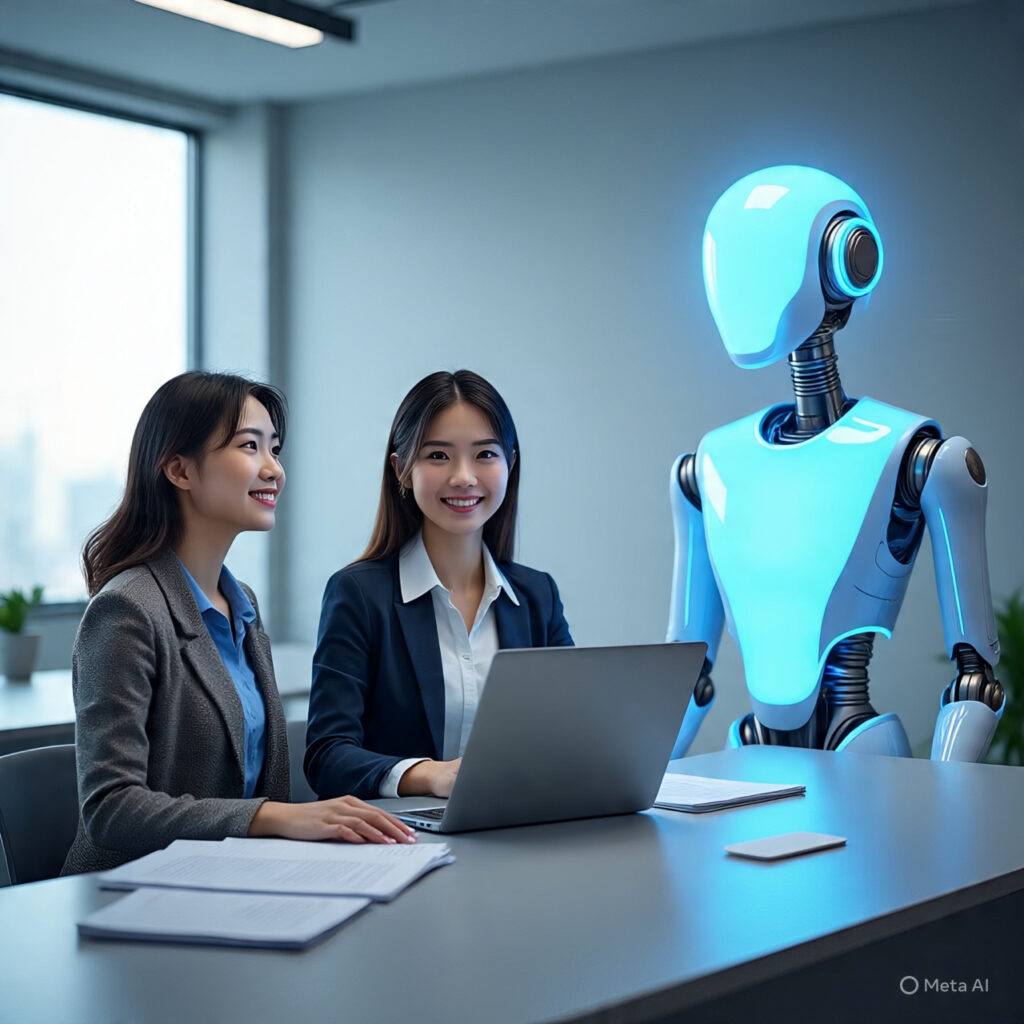
One of the biggest AI trends in 2025 is the shift from replacement to collaboration. Instead of taking over jobs entirely, AI tools are designed to assist humans, helping them work smarter and faster.
Examples include:
- AI copilots for writing and coding
- AI tools assisting doctors with diagnostics
- AI-powered decision support for businesses
This trend focuses on augmentation, not automation alone.
2. Hyperautomation Across Industries
Hyperautomation combines AI, machine learning, robotic process automation (RPA), and analytics to automate entire workflows.
In 2025, businesses are automating:
- Customer support processes
- Supply chain operations
- Financial reporting
- HR and recruitment tasks
The goal is end-to-end automation with minimal human intervention—while still maintaining oversight.
3. Generative AI Goes Mainstream
Generative AI continues to dominate AI trends in 2025. These models can create:
- Blog posts and marketing copy
- Images and illustrations
- Videos and voiceovers
- Software code
Generative AI tools are now widely used in content creation, advertising, education, and entertainment.
However, quality control and ethical use remain important considerations.
4. Personalized AI Experiences
AI systems in 2025 are becoming deeply personalized. Instead of one-size-fits-all solutions, AI adapts to individual users in real time.
Personalization is seen in:
- AI learning platforms
- E-commerce recommendations
- Fitness and health apps
- AI assistants that understand user preferences
This trend improves user experience but also raises privacy concerns.
5. Ethical AI and Responsible Development
As AI adoption increases, so does the need for ethical and transparent systems. In 2025, responsible AI is a top priority.
Key focus areas include:
- Reducing bias in AI algorithms
- Transparency in AI decision-making
- Data privacy and user consent
- Compliance with global regulations
Companies that ignore ethical AI risk losing user trust and facing legal challenges.

6. AI and Automation in the Workplace
Automation in 2025 is transforming jobs rather than eliminating them. Routine and repetitive tasks are increasingly automated, allowing employees to focus on higher-value work.
AI is helping with:
- Data analysis
- Scheduling and planning
- Customer interactions
- Performance tracking
New roles are emerging, such as AI specialists, automation managers, and data ethics officers.
7. AI in Healthcare and Life Sciences
Healthcare is one of the fastest-growing areas for AI in 2025. AI systems assist doctors, researchers, and patients in multiple ways.
Key applications include:
- Early disease detection
- Medical image analysis
- Personalized treatment plans
- Drug discovery and research
AI improves accuracy, reduces costs, and enhances patient outcomes.
8. Edge AI and Real-Time Processing
Edge AI refers to processing data closer to where it is generated rather than relying solely on cloud servers.
In 2025, Edge AI is growing rapidly because it:
- Reduces latency
- Improves data security
- Enables real-time decision-making
This trend is crucial for smart devices, autonomous systems, and IoT applications.
9. AI-Powered Cybersecurity
As cyber threats grow more sophisticated, AI plays a critical role in cybersecurity.
AI systems in 2025 can:
- Detect threats in real time
- Predict vulnerabilities
- Automate security responses
This makes AI an essential defense tool for businesses and governments.
10. AI Regulation and Global Standards
Governments worldwide are introducing AI regulations to ensure safe and fair usage. In 2025, AI laws focus on:
- Data protection
- Accountability
- Ethical development
- Transparency
Clear regulations help build trust while still encouraging innovation.
Benefits of AI and Automation in 2025
AI trends in 2025 offer several advantages:
- Increased productivity
- Reduced operational costs
- Better decision-making
- Improved customer experiences
- Faster innovation
When used responsibly, AI becomes a powerful growth engine.
Challenges and Risks of AI in 2025
Despite its benefits, AI also presents challenges:
- Data privacy concerns
- Algorithmic bias
- Job displacement fears
- Over-reliance on automation
Addressing these issues requires strong governance and human oversight.
The Future of AI Beyond 2025
Looking ahead, AI will continue evolving toward:
- More autonomous systems
- Deeper emotional intelligence
- Stronger human-AI collaboration
- Wider global adoption
The future of AI depends on how responsibly we develop and use it today.
Conclusion: What’s Next for AI and Automation?
AI trends in 2025 show a clear direction: smarter, safer, and more human-centered technology. Automation will continue to reshape industries, but the focus will remain on collaboration rather than replacement.
Businesses and individuals who understand these trends and adapt early will be best positioned for success in an AI-driven future.