

How Artificial Intelligence Is Transforming Industries and Society
Artificial intelligence (AI) is no longer a futuristic concept—it’s a daily reality. As we move into 2025, AI tools are reshaping how we work, learn, receive healthcare, and interact with technology. From smarter chatbots to advanced predictive systems, AI is becoming faster, more creative, and more deeply embedded in our lives.
However, with these powerful advancements come serious questions around ethics, regulation, and human collaboration. This article explores the state of AI tools in 2025, their real-world applications, emerging trends, and what they mean for society as a whole.
Overview of AI Tools in 2025
What Are AI Tools?
AI tools are technologies designed to analyze data, automate tasks, and support decision-making. In 2025, these tools range from conversational chatbots and recommendation engines to complex systems that diagnose diseases or forecast financial markets.
Simply put, if data is involved, AI can probably improve the process.
The AI Market Landscape
The AI market in 2025 is growing at an incredible pace. Tech giants like Google, Microsoft, and Amazon continue to lead innovation, while startups introduce specialized solutions in areas such as ethical AI, personalization, and education technology.
Businesses that fail to adopt AI risk falling behind in efficiency, customer experience, and competitiveness.
Key Players Driving AI Innovation
- Global tech companies offering cloud-based AI platforms
- Startups focusing on niche applications like healthcare diagnostics
- Organizations dedicated to AI ethics, transparency, and fairness
Together, these players are shaping how AI evolves—and how responsibly it is used.
Major Advancements in AI Technology
Machine Learning and Deep Learning
By 2025, AI systems can process massive datasets with remarkable speed and accuracy. Improved algorithms and computing power allow machines to recognize patterns, predict outcomes, and learn continuously with minimal human input.
Natural Language Processing (NLP)
Modern AI can understand tone, context, and intent—not just words. NLP advancements now enable:
- Realistic conversations
- Accurate language translation
- Sentiment analysis
- High-quality content generation
Talking to AI feels more like talking to a person than a machine.
Generative AI Models
Generative AI is redefining creativity. These models can produce text, images, music, and videos that closely resemble human-made content. Businesses use them for:
- Marketing and branding
- Entertainment and media
- Product design and storytelling
Industry Applications of AI Tools
AI in Healthcare
AI is transforming healthcare by:
- Detecting diseases earlier
- Supporting medical imaging and diagnostics
- Personalizing treatment plans
- Reducing administrative workload
Doctors gain powerful tools, while patients receive faster and more accurate care.

AI in Finance and Banking
In finance, AI helps with:
- Fraud detection
- Risk assessment
- Automated trading
- Personalized financial advice
Robo-advisors are now common, offering data-driven investment guidance at scale.
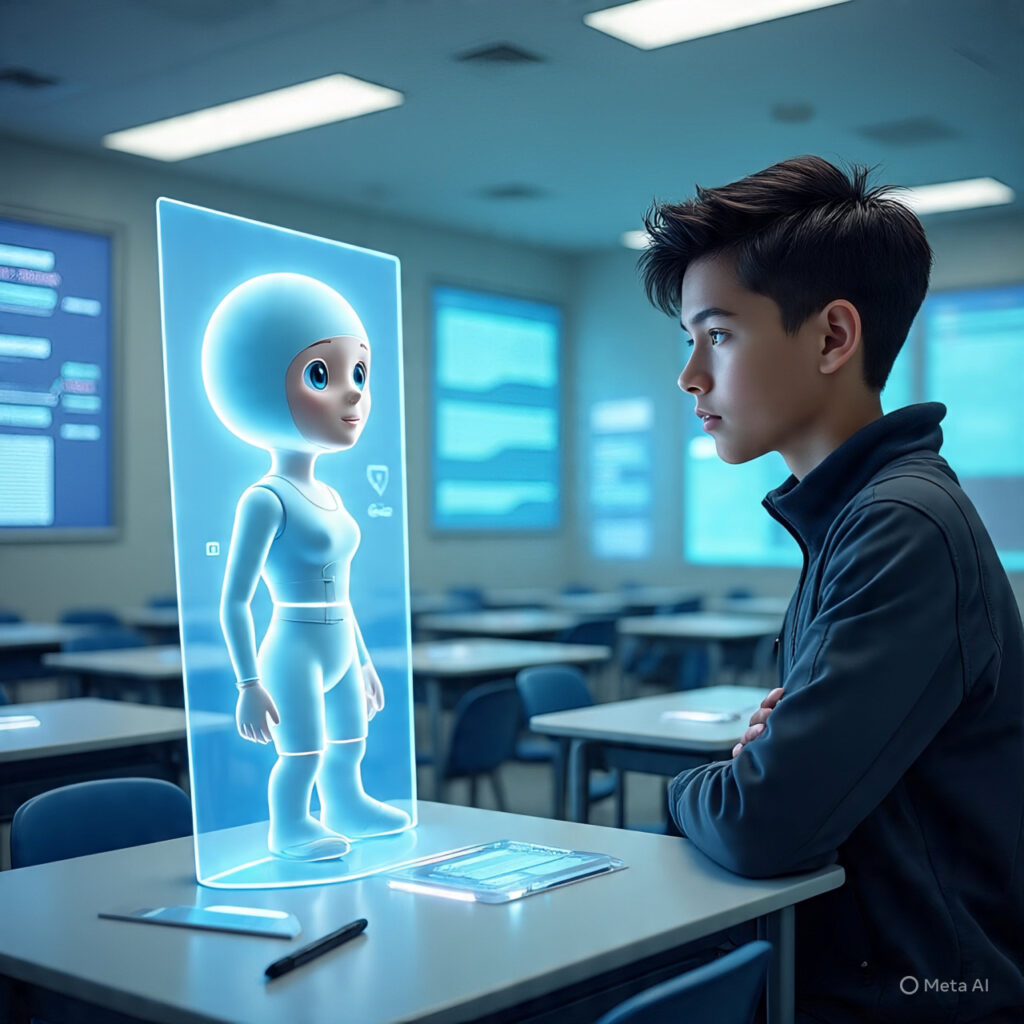
AI in Education
Education is becoming more personalized thanks to AI. Intelligent systems can:
- Adapt lessons to individual learning styles
- Track student progress
- Support teachers with real-time insights
This shift helps ensure students learn at their own pace.
Smart Cities and Infrastructure
AI powers smart cities through:
- Traffic optimization
- Energy efficiency
- Predictive maintenance
- Intelligent public transport systems
Urban living in 2025 is smarter, safer, and more sustainable.
Ethical Challenges of AI in 2025
Data Privacy and Security
As AI relies heavily on data, protecting personal information is critical. Organizations must balance innovation with strong data protection practices.
Bias and Fairness in AI
AI systems can reflect human bias if trained on incomplete or unfair data. Ensuring diversity in datasets and transparency in algorithms is essential for ethical AI.
Accountability in AI Decisions
When AI makes mistakes, accountability becomes unclear. Clear governance frameworks are needed to define responsibility for AI-driven outcomes.

The Future of Human–AI Collaboration
Augmentation vs. Automation
- Augmentation helps humans work better (AI as a support tool)
- Automation replaces repetitive tasks
The future lies in balancing both—using AI to enhance human capabilities rather than replace them entirely.
Skills Needed for the Future Workforce
Key skills for 2025 include:
- Creativity
- Critical thinking
- Emotional intelligence
- AI and data literacy
Adaptability is the most valuable skill of all.
Building Trust in AI Systems
Trust grows when AI systems are:
- Transparent
- Secure
- Explainable
- Fair
Users need to understand how AI reaches decisions.

AI Regulation and Global Standards
Governments worldwide are developing AI regulations to ensure responsible use. Effective laws protect users while still encouraging innovation. Collaboration between policymakers, companies, and researchers is essential.
Emerging AI Trends in 2025
AI-Driven Personalization
From shopping to entertainment, AI delivers highly customized experiences—raising both convenience and privacy concerns.
Edge Computing and AI
Processing data closer to devices reduces latency and improves real-time performance, especially for smart devices and IoT systems.
Quantum Computing and AI
Quantum computing could dramatically boost AI’s problem-solving abilities, unlocking breakthroughs in science, medicine, and logistics.
Conclusion: The Societal Impact of AI Tools
AI tools in 2025 offer incredible opportunities to improve healthcare, education, sustainability, and productivity. At the same time, ethical challenges, workforce changes, and regulatory demands must be addressed thoughtfully.
By prioritizing responsible development and human-AI collaboration, society can ensure AI benefits everyone—not just a few.